
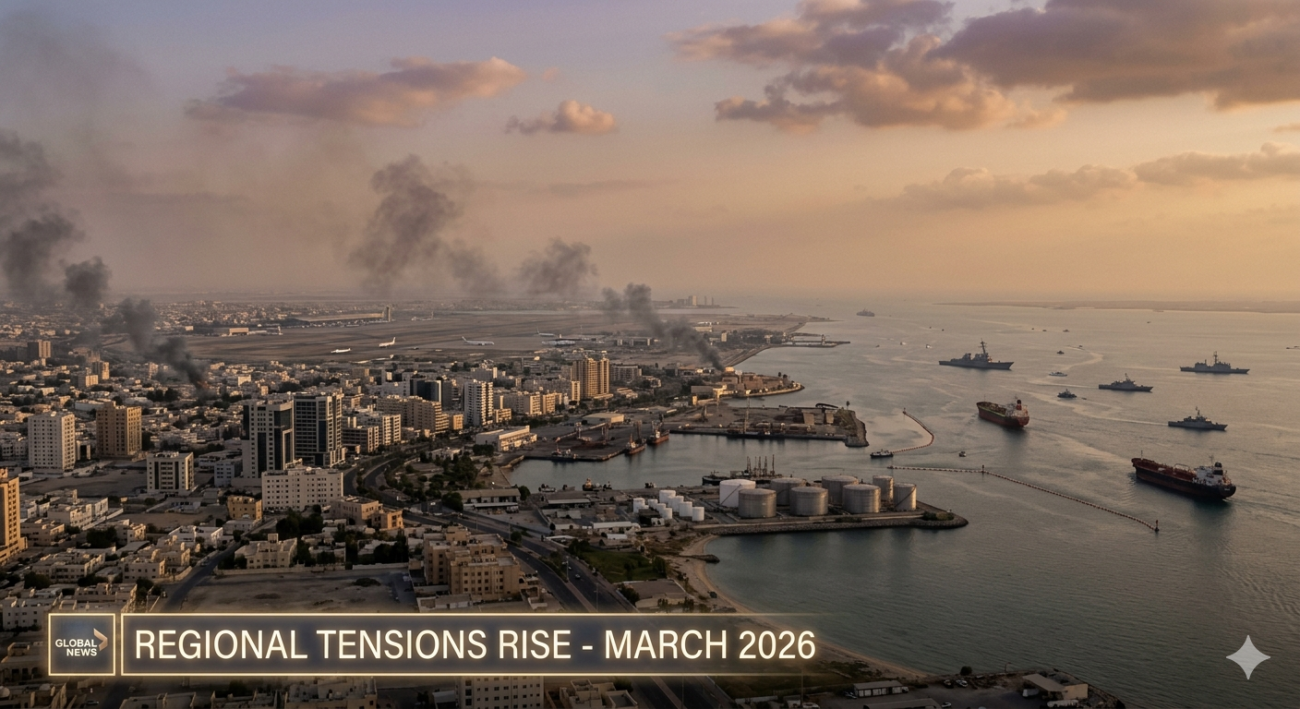
Beyond the Strategy Maps: The Human Reality of the 2026 Iran Crisis
As of March 16, 2026, the joint U.S.-Israeli military campaign in Iran has moved past its third week. While official briefings from Washington and Jerusalem speak of “degraded capabilities” and “surgical precision,” the view from the ground paints a much more complex picture of a region in flux and a world on edge. This is the current Iran war status in 2026, where the geopolitical and the personal are colliding in unprecedented ways.
A Regional Pulse: From Tehran to Tel Aviv
The military intensity reached a new peak this morning with “wide-scale” IDF strikes targeting Tehran’s infrastructure. But for the people living there, the story isn’t about the targets—it’s about the sound. The low, guttural rumble of B-1 bombers has become a terrifying part of the daily routine. In the wake of the initial strikes that claimed the life of Supreme Leader Ali Khamenei on March 1, a sense of profound uncertainty has settled over the country.
In Israel, the atmosphere is equally taut. Despite the sophisticated multi-layered defense systems, the sheer volume of Iranian retaliatory fire—including the first use of the solid-fueled Sejjil ballistic missile—has kept millions of civilians in a state of high alert. It is no longer a war of “over there”; it is a war of the nearby siren and the basement shelter.
The Global Chokepoint: The Strait of Hormuz
Perhaps the most significant “humane” angle of this conflict is how a 21-mile-wide stretch of water is dictating the quality of life thousands of miles away. The effective closure of the Strait of Hormuz has transformed the global economy:
- Energy Insecurity: In countries like Sri Lanka, fuel is no longer a commodity; it’s a rationed luxury managed by QR codes.
- Inflationary Pressure: From the price of a grocery haul in London to the cost of heating a home in New York, the “risk premium” of this war is being paid by everyday people.
- Economic Isolation: Major international events, including the Bahrain and Saudi Arabian Grands Prix, have been erased from the calendar, signaling a region that is “closed for business.”
Leadership and the Fog of War
Politically, the situation is increasingly opaque. With reports that the new Supreme Leader, Mojtaba Khamenei, has been wounded, the Islamic Revolutionary Guard Corps (IRGC) appears to be “calling the shots.” This shift toward a purely military leadership in Tehran has made the path to a ceasefire almost invisible.
U.S. President Donald Trump has maintained a “maximum pressure” stance, stating that while dialogue exists, the terms are “not good enough yet.” This hardline diplomacy, while intended to project strength, has left little room for the “exit ramps” usually sought in international conflict.
The Shadow Front: Lebanon and Beyond
The war has not stayed within Iran’s borders. Southern Lebanon has become a devastating secondary theater, with the IDF pressing into the Litani River region to push back Hezbollah. For the Lebanese people, this is a haunting echo of past conflicts, but with a modern, more lethal intensity. The humanitarian toll—over 3,000 dead across all fronts according to organizations like HRANA—is a stark reminder that in 2026, the distance between a “targeted strike” and a civilian tragedy is often zero.
The Fragile Future
As we look toward the end of March, the question isn’t just who is winning the military exchanges, but what kind of world will be left when the dust settles. The destruction of Iran’s nuclear and oil infrastructure on Kharg Island may achieve short-term strategic goals, but it also risks radicalizing a generation and permanently destabilizing global energy markets.
The Iran war status in 2026 is a testament to the fact that in a hyper-connected world, there is no such thing as a “contained” conflict. Every missile fired in the Persian Gulf vibrates through the global supply chain, and every siren in Tehran echoes in the halls of international power.
Prestige PIC 3.1 V3 2000 Watts Induction Cooktop
Table of Contents
Vivo T5x 5G Set for India Launch: A Battery Powerhouse with Dimensity 7400 Turbo

One thought on “Iran War Status March 2026: Conflict Escalates as Strait of Hormuz Remains Closed”